

 Go
GoContainova
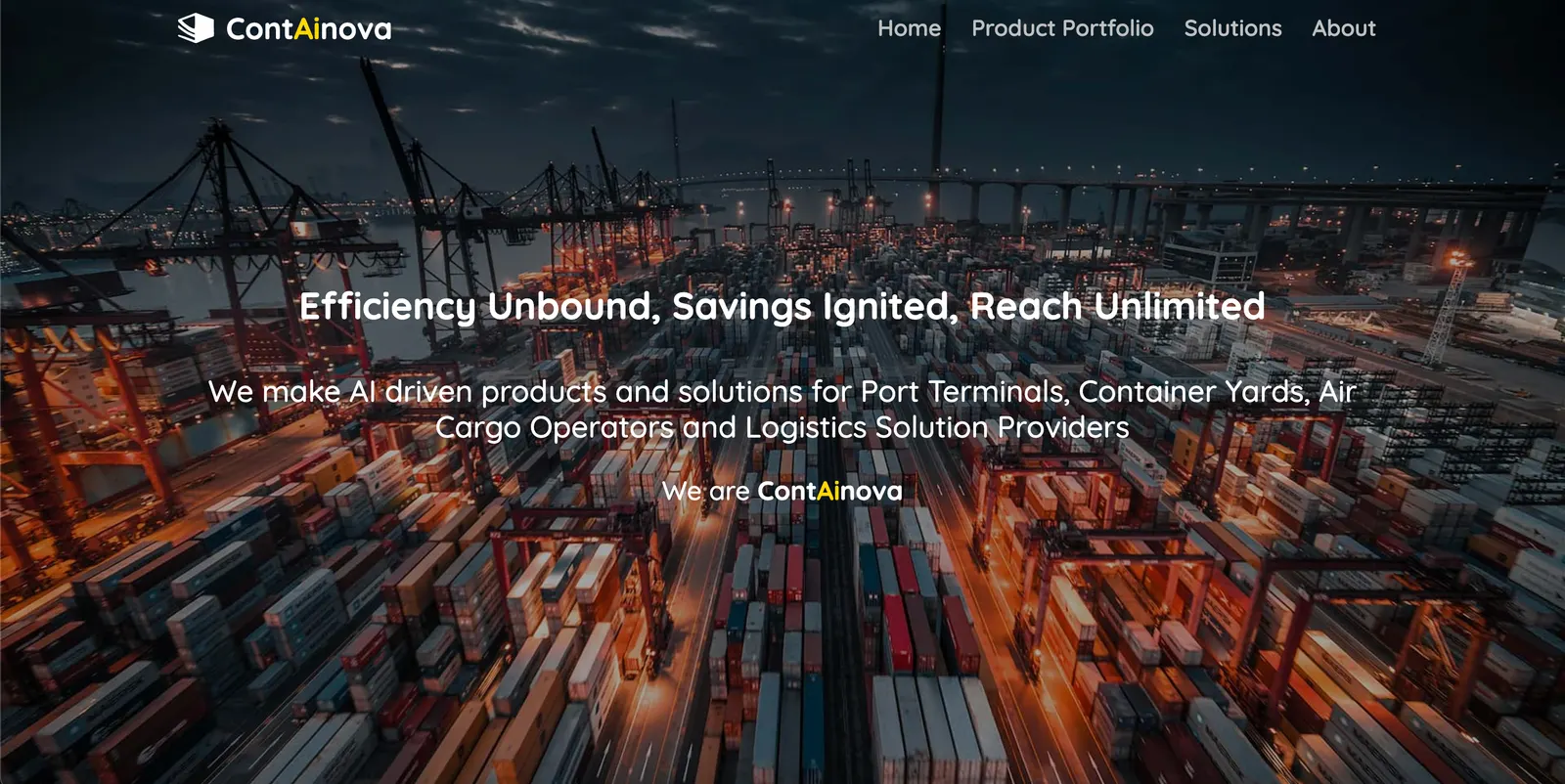
An AI-powered application for managing container yards.
| Type | Logistics platform |
|---|---|
| Where | Blu Cocoon Digital |
| Role | Tech lead |
| Stack | Angular, React, Flutter, Azure Functions, MongoDB, Node.js |
| Outcome | Container placement efficiency up 35%. |
Overview
Containova is an intelligent container yard management system built to optimize logistics operations in container yards. It streamlines container movement, improves space utilization, and automates traditionally manual processes using AI and modern web technologies.
My contribution
- Led development and maintenance across the full lifecycle, from architecture to deployment, while mentoring frontend and backend developers.
- Built and maintained modular Angular and React UIs, optimized for real-time updates and for tablets used out in the yard.
- Integrated AI models into the Flutter app for placement suggestions and automated position validation.
- Designed and implemented APIs on Azure Functions for fast, scalable backend communication.
- Modeled MongoDB collections for flexible yet performant queries over yard layouts, container statuses, and personnel tasks.
- Implemented CI/CD pipelines, logging, and health checks for smooth deployment and monitoring.
Key features
- Container check-in/check-out: digitally tracks incoming and outgoing containers with minimal human input.
- Yard occupancy planning: a visual yard layout with live updates on container positions.
- AI-powered placement optimization: suggests the best slot for each incoming container based on usage patterns and yard constraints.
- Automated position detection: image processing detects and confirms container and machinery positions in real time.
- Task management: assigns, tracks, and audits tasks for yard personnel and logistics staff.
- Cross-platform frontend: Angular and React for admin and operations views, tailored to each user role.
- Serverless architecture: Azure Functions for backend operations, for scalability and lower cost.
- MongoDB backend: schemaless flexibility for varied container data and activity logs.

